GraphQL API Development Services
Atharva ITS designs efficient GraphQL APIs with clean schemas, optimized resolvers and secure query controls, giving your web, mobile and dashboard applications precise access to data from multiple backend systems without over-fetching or under-fetching.
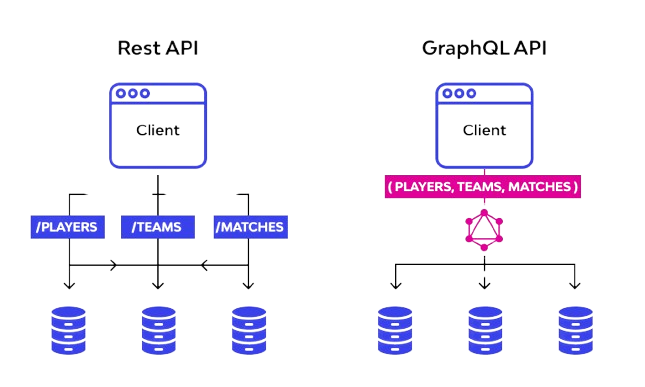
Why Choose Our GraphQL API Development Services?
Precise data fetching: GraphQL lets clients request exactly the fields they need in a single query, reducing over-fetching and under-fetching and giving frontend teams more control over how they consume backend data.
Improved performance and speed: By combining multiple data needs into one GraphQL query and optimizing resolvers and batching, we reduce round trips and improve perceived performance for users across web and mobile applications.
Strong API evolution support: With a schema-driven model, GraphQL allows APIs to evolve by adding new fields and types without breaking existing clients, simplifying long-term API lifecycle management.
Unified data access layer: We use GraphQL to create a single access layer across REST APIs, databases, microservices and third‑party services, so frontends work with one consistent schema instead of juggling multiple endpoints.
GraphQL API Development Services We Offer
Custom Graphql Api Development
We design and build custom GraphQL APIs with clear, well-structured schemas and efficient resolvers tailored to your domain, giving web, mobile and internal dashboard applications a predictable way to query data.
Your schema is kept understandable and well documented so new teams and products can adopt the GraphQL API quickly and safely.
Graphql Integration & Backend Aggregation
We integrate GraphQL with existing REST APIs, databases, microservices and external services to create a unified data access layer.
Frontends talk to a single GraphQL endpoint while resolvers orchestrate calls across multiple backend systems, simplifying integration and reducing client-side complexity.
Graphql Optimization & Security
We optimize GraphQL query performance through resolver tuning, batching, caching and pagination strategies so your API remains responsive as usage grows.
Security measures such as query depth and complexity limits, authentication and authorization, plus monitoring and logging help protect and observe your GraphQL endpoints in production.
Build Smarter APIs with GraphQL
Planning to serve multiple frontends or aggregate data from many backend systems? Work with our GraphQL experts to design a flexible API layer that delivers precise data, strong performance and safer evolution over time.
Frequently Asked Questions
GraphQL is a query language and runtime for APIs that lets clients request exactly the data they need, often in a single request, while REST typically relies on multiple endpoints that may over-fetch or under-fetch data.
GraphQL is a strong choice when you have multiple frontend clients, complex data relationships, or applications that suffer from over-fetching, under-fetching or too many round trips with traditional REST APIs.
Yes. With well-designed schemas, efficient resolvers, caching and query controls, GraphQL APIs can handle high traffic and complex query patterns while maintaining good performance.
GraphQL is ideal when clients need flexible data fetching, multiple frontend consumers, or reduced API versioning complexity.
Yes. GraphQL can sit on top of existing REST endpoints, databases and services as a unified access layer, allowing clients to query data from multiple sources through one GraphQL schema.
Yes. With proper authentication and authorization, query depth and complexity limits, validation and monitoring, GraphQL APIs can be safely used in production environments.
Not necessarily. GraphQL often complements existing REST or RPC APIs, providing a more flexible option for frontends while existing integrations continue to use other protocols where appropriate.