Cloud Storage Services
As data grows, Atharva ITS implements scalable cloud storage solutions for applications, media assets, and enterprise workloads. We design storage architectures with the right balance of performance, cost, and durability while ensuring secure access and compliance with data governance policies.
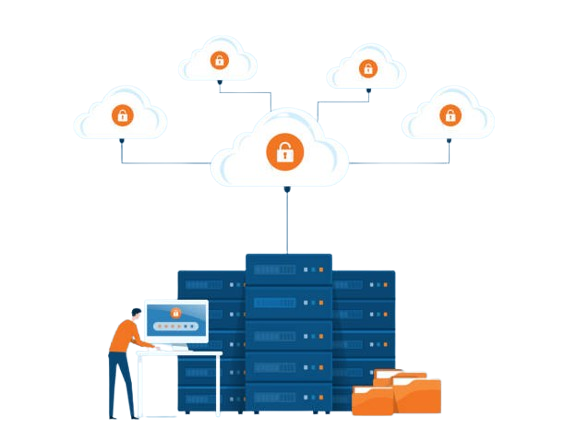
Why Choose Our Cloud Storage Services?
Scalable storage on demand: Scale storage capacity from gigabytes to petabytes without infrastructure planning or procurement delays. Atharva ITS implements elastic cloud storage that automatically expands as your data grows, eliminating capacity constraints and over-provisioning costs. Whether storing user-generated content, application data, or media libraries, your storage infrastructure adapts to business needs in real-time.
High availability and durability: Ensure data accessibility with durability through automatic geo-redundant replication across multiple data centers. Atharva ITS configures storage with built-in redundancy, automatic failover, and cross-region replication to protect against hardware failures, data center outages, or regional disasters while maintaining instant access to your data.
Secure data management: Protect sensitive data with encryption at rest and in transit, role-based access controls, compliance and industry regulations. Atharva ITS implements Azure Private Link, AWS PrivateLink, access policies, audit logging, and immutable storage options to prevent unauthorized access, data breaches, and ransomware attacks.
Optimized storage costs: Reduce storage expenses by 60-80% through intelligent tiering, lifecycle policies, and compression. Atharva ITS analyzes data access patterns to automatically move infrequently accessed data to lower-cost tiers (cool, archive) while keeping hot data on high-performance storage, ensuring cost efficiency without sacrificing availability when needed.
Cloud Storage Services We Offer
Cloud Object & File Storage Implementation
We implement cloud-based object and file storage solutions for applications, media assets, and enterprise data.
What we implement:
Object storage for unstructured data – Deploy Azure Blob Storage or AWS S3 for storing images, videos, documents, logs, and application-generated content with REST API access
Storage tier optimization – Configure hot tier (frequent access), cool tier (infrequent access), and archive tier (long-term retention) to balance performance and cost
File shares for collaboration – Set up Azure Files or AWS EFS for shared file systems accessible from Windows, Linux, and containerized applications
CDN integration – Connect storage with Azure CDN or AWS CloudFront for global content delivery with low-latency access from edge locations
Data lake implementation – Build Azure Data Lake Storage or AWS S3-based data lakes for analytics, machine learning, and big data processing
Access control & security – Implement shared access signatures (SAS), signed URLs, IAM policies, and private endpoints for secure storage access
Cloud Storage Migration
We migrate data from on-premise or legacy storage systems to the cloud with integrity checks and minimal downtime.
Migration approaches:
Network-based migration – Transfer data over VPN, ExpressRoute, or Direct Connect for secure online migration with bandwidth optimization
Offline data transfer – Use Azure Data Box, AWS Snowball, or physical media for large-scale migrations (10TB+) when network transfer is impractical
Incremental sync migration – Implement AzCopy, AWS DataSync, or rclone for continuous synchronization during phased migrations with cutover validation
Data integrity validation – Perform checksum verification, file count validation, and sample data testing to ensure complete and accurate migration
Legacy migration – Move data from on-premise to cloud file or object storage
Database storage migration – Migrate database files, backups, and transaction logs to cloud-managed storage with minimal downtime
Backup, Archival & Disaster Recovery
We design automated data lifecycle policies that move data between storage tiers based on age, access patterns, and compliance requirements.
Lifecycle management services:
Automated tiering policies – Configure rules to transition data from hot to cool to archive tiers after defined periods (e.g., move to cool after 30 days, archive after 90 days)
Retention policy enforcement – Implement legal hold, time-based retention, and immutable storage for compliance with GDPR, HIPAA, SOX, and industry regulations
Storage analytics & optimization – Monitor storage usage, access patterns, and cost metrics to identify optimization opportunities and right-size storage allocation
Data archival strategies – Design long-term archival workflows for historical records, audit logs, and compliance data with retrieval procedures
Expiration & deletion automation – Configure automatic deletion of temporary files, logs, or expired data to prevent storage bloat and reduce costs
Multi-region replication – Set up geo-redundant storage or cross-region replication for business continuity and disaster recovery compliance
Storage Types And Platforms We Support
Atharva ITS designs and implements cloud storage solutions tailored to your data type, access patterns, and performance requirements.
Storage Platforms

Azure Storage
Blob Storage, Azure Files, Azure Data Lake Storage

Aws Storage
S3, EFS, EBS, Glacier

Google Cloud Storage
Cloud Storage, Filestore, Persistent Disk

Hybrid Storage
StorSimple, AWS Storage Gateway, Azure File Sync
Storage Types

Object Storage
Unstructured data, media files, backups, data lakes (Azure Blob, AWS S3)

File Storage
Shared file systems for applications and collaboration (Azure Files, AWS EFS)

Block Storage
High-performance storage for databases and VMs (Azure Managed Disks, AWS EBS)

Archive Storage
Long-term retention for compliance and historical data (Azure Archive, AWS Glacier)
Use Cases
Common cloud storage use cases

Media & Content Management
Store and deliver images, videos, and rich media for websites and mobile apps with CDN integration for global distribution and fast loading times.

Application Data Storage
Provide scalable backend storage for SaaS applications, mobile apps, and web platforms to handle user uploads, documents, and generated content.

Big Data & Analytics
Build data lakes for storing structured and unstructured data used in business intelligence, machine learning, and advanced analytics workloads.
Backup & Archive Destination
Use low-cost cloud storage tiers as targets for backup systems, historical records, and long-term compliance archival with configurable retention policies.

Development & Testing Environments
Create isolated storage for development datasets, testing artifacts, and CI/CD pipelines without impacting production storage costs.
Store and Scale Your Data in the Cloud
Work with our cloud experts to design secure and scalable storage solutions that grow with your business.
Frequently Asked Questions
We work with Azure Blob Storage, AWS S3, Google Cloud Storage, and hybrid storage solutions.
Yes. Cloud storage supports encryption, access control, and compliance standards when configured correctly.
Yes. Cloud storage is well-suited for large files, media assets, and high-volume data workloads.
We use tiered storage, lifecycle policies, and monitoring to control and optimize storage expenses.
Object storage (Azure Blob, AWS S3) stores data as objects with metadata, ideal for unstructured data like media files accessed via REST APIs. File storage (Azure Files, AWS EFS) provides traditional file system interfaces (SMB/NFS) for shared folders accessible from multiple servers or containers.
Hot tier is for frequently accessed data with instant access and higher storage costs. Cool tier is for infrequently accessed data (accessed less than once per month) with lower storage costs but higher access fees. Archive tier is for rarely accessed data (long-term retention) with the lowest storage cost but retrieval delays of hours.
Yes. Cloud storage supports standard protocols (REST API, SMB, NFS) and SDKs for .NET, Java, Python, and Node.js. We integrate storage with existing applications using connection strings, access keys, or managed identities without requiring application redesign.
Cloud storage pricing includes storage capacity (per GB/month), data retrieval fees, data transfer out fees, and operations (API requests). Costs vary by storage tier—hot storage is most expensive for storage but has no retrieval fees, while archive storage has the lowest storage cost but charges for data retrieval and early deletion.