
If you're a CTO or technical founder at a UK-based company trying to hire a .NET developer in the UK, you're navigating a market that looks very different from even two years ago. On-shore UK .NET developers are expensive and increasingly scarce for contract work. Freelance platforms deliver inconsistency. And offshore agencies range from excellent to genuinely painful, with little in the way of obvious signals to tell them apart before you sign.
This guide cuts through the noise. It covers what to look for when you hire a .NET developer for UK projects, what rates actually look like across different models, and the questions that separate credible teams from ones that will cost you more in the long run.
What "Hire a .NET Developer" Actually Means in 2026
The term covers a wide range of arrangements, and the right one depends on what you're actually building.
A single freelance developer makes sense for a well-scoped, short-term project with clear outputs. But most .NET projects aren't like that. Enterprise integrations, e-commerce platforms, and cloud migrations require more than one discipline: backend development, QA, infrastructure, and someone who can make architectural decisions without daily hand-holding.
For most UK companies looking to move fast on a .NET project, the realistic options are:
UK-based contractor: High quality, high cost, very limited availability for senior talent
Offshore development agency: Wide quality range, cost-effective when done right, requires careful vetting
Dedicated offshore team: Best for ongoing product work or multi-year development relationships
The shift toward offshore agencies has accelerated significantly, driven by UK developer rates and a genuine improvement in the quality of senior talent available from India, Eastern Europe, and Southeast Asia.
.NET Developer Rates: What to Expect Across Hiring Models
UK-based .NET contractors charge between £70 and £140 per hour for senior-level work, with London rates sitting at the upper end. India-based agencies with senior-led teams generally sit between £20 and £35 per hour for .NET work, with cloud and Azure expertise commanding a premium.
Here's how that plays out over a typical 6-month engagement for one senior developer:
Hiring model | Typical senior rate | Indicative 6-month cost* |
UK contractor (London-weighted) | £70–£140 / hr | £145,000–£290,000 |
India, senior-led team | £20–£35 / hr | Roughly a third of UK cost |
*Development cost only, before QA, infrastructure, or project management.
Specialist skills that push rates higher regardless of location:
Azure-native development and cloud migration work
Umbraco CMS implementation (a particularly tight talent pool)
Shopify API and e-commerce integration
QA automation (Playwright, Selenium)
Microservices architecture and containerisation
If a team quotes you a flat rate with no differentiation between junior and senior work, that's worth probing. Most credible agencies have senior architects and developers leading the work, with supporting resource behind them. The billing structure should reflect that.
What to Look for Before You Hire
Senior-Led Delivery, Not Account-Managed
One of the most common complaints from UK companies that have worked with offshore development agencies is that the person they spoke to in pre-sales wasn't the person doing the work. The discovery call was with a senior consultant; the actual development went to a team of juniors with no one senior enough to flag problems early.
Ask directly: who will be doing the architecture and technical decision-making on your project? Ask to speak with them during evaluation. A team confident in its senior talent will put them in front of you.
Documented Process for QA
Good .NET development and good QA are not the same thing. Ask for specifics: do they write automated tests? What frameworks do they use (Playwright and xUnit are current standards for .NET projects)? Do they have a CI/CD pipeline in place? The answer to these questions tells you a lot about how the team actually works day-to-day, not just how they pitch.
Track Record With Your Stack
.NET covers a wide range: ASP.NET Core APIs, Blazor, .NET MAUI, Umbraco, Azure Functions, and more. A team that has done mostly legacy .NET Framework work is a different proposition to one with recent, live production experience in .NET 8 and Azure. Ask for specific examples, not just a list of technologies on a website.
Proven Delivery for Demanding Western Clients
This isn't about nationality; it's practical. US and UK clients share similar expectations around communication, project reporting, and commercial terms. A team that has already delivered for demanding English-speaking clients has worked through the communication style, reporting cadence, and commercial alignment that reduce your risk. Ask for references you can actually speak to. As a practical bonus, an India-based team overlaps the UK working day by four to five hours, more usable overlap than most US engagements get.
Red Flags to Watch For
No discovery phase. Any team that jumps straight to a statement of work without understanding your system, your data, and your constraints is cutting corners that will surface later.
Lowest quote in the room. Genuinely cheap .NET development usually means junior developers doing work without senior oversight. The initial project cost is lower; the rework cost is not.
Generic portfolio. Case studies that describe "a large e-commerce client" or "a financial services platform" without specifics are hiding something. Either the work isn't theirs, or it wasn't impressive enough to name.
No dedicated point of contact. Rotating project managers or account managers with no technical background create communication overhead that compounds across a project.
The Case for a Senior-Led Offshore Team
The economics are straightforward. A senior-led offshore .NET team working with UK clients at £20–£35 per hour delivers comparable technical quality to a UK contractor at £90–£120 per hour, at roughly a quarter to a third of the cost. For a 6-month engagement, that saving is material.
The risk, as with any offshore arrangement, is quality and communication. That risk comes down primarily to two things: the seniority of the people actually doing the work, and whether the team has a genuine track record with clients in your industry.
A team with both is worth paying a small premium over the cheapest option on the market. The projects that go wrong offshore almost always go wrong because someone optimised purely for cost.
Why Atharva IT Services Works for UK .NET Projects
Atharva IT Services is a senior-led .NET development team based in India, with a track record delivering .NET projects for US clients. The team specialises in ASP.NET Core, Azure cloud development, Umbraco CMS, Shopify and Amazon SP-API integrations, and full QA automation using Playwright.
Engagements run end-to-end: architecture, development, QA, and cloud deployment. There are no account managers between you and the technical team. Projects are scoped properly before work begins, and senior developers lead the architecture from day one.
If you're planning a .NET project and want to understand what the engagement would look like, the team at atharvaits.com is straightforward to reach. The first conversation is a technical one, not a sales one.
Frequently Asked Questions
Q1: How much does it cost to hire a .NET developer in the UK?
A: UK-based senior .NET contractors charge £70–£140 per hour, with London at the top end. Senior-led offshore teams typically deliver comparable quality at £20–£35 per hour.
Q2: Is it better to hire a UK contractor or an offshore .NET team?
A: A UK contractor suits short, on-site-sensitive work. For most ongoing or multi-discipline .NET projects, a senior-led offshore team offers similar quality at a quarter to a third of the cost, provided you vet seniority and UK track record.
Q3: What should I ask a .NET development partner before hiring?
A: Ask who leads the architecture, what .NET version and Azure services they run in live production, how they handle automated QA, whether they have client references you can speak to, and what their discovery and scoping process looks like.
Q4: How do I avoid a bad offshore .NET hire?
A: Watch for no discovery phase, the lowest quote in the room, generic case studies, and no dedicated technical point of contact. Insist on speaking to the senior who will actually lead your build.
Key Questions to Ask Any .NET Development Partner
Before you commit to any team, get clear answers to these:
Who leads the architecture on our project, and can we speak with them before we start?\
What .NET version and Azure services do you currently have live production projects on?
How do you handle QA? Is it automated, and what frameworks do you use?
Do you have UK or US references we can speak to?
What does your discovery and scoping process look like before development starts?
How do you handle scope changes mid-project?
The answers tell you more than any portfolio page. A team that can answer all six in specific, concrete terms (with names, frameworks, and real examples) is a team that has done this before.
Atharva IT Services works with CTOs and technical founders at mid-size e-commerce, SaaS, and fintech companies in the US. Find out more at atharvaits.com.
Conclusion
Hiring a .NET developer is about more than comparing hourly rates. The right partner brings senior technical expertise, proven delivery processes, and clear communication throughout the project. Taking time to evaluate these factors upfront can reduce project risk and lead to better long-term outcomes.
Related Blogs

Introduction To Rate Limiting Middleware in ASP.NET Core
Discover how rate limiting middleware boosts performance in ASP.NET Core
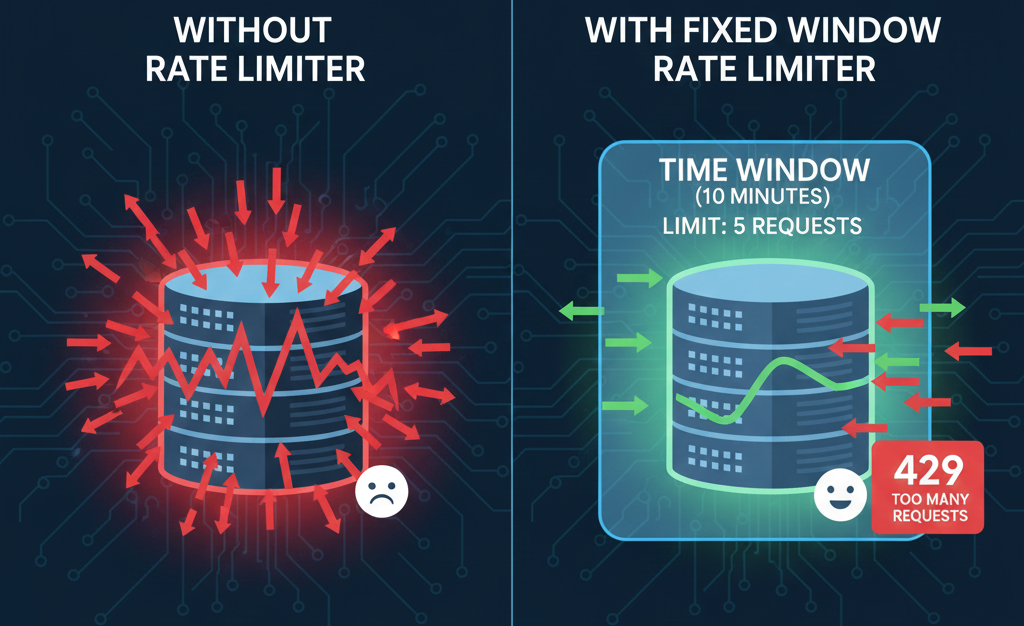
Fixed Window Rate Limiter in ASP.NET Core
How the Fixed Window Rate Limiter keeps ASP.NET Core APIs stable and controlled.

Sliding Window Rate Limiter in ASP.NET Core: What is it and when to use it?
Sliding Window Rate Limiting to balance bursty traffic and protect ASP.NET Core APIs.